
February 11, 2026
Wild Wednesday: Curlew

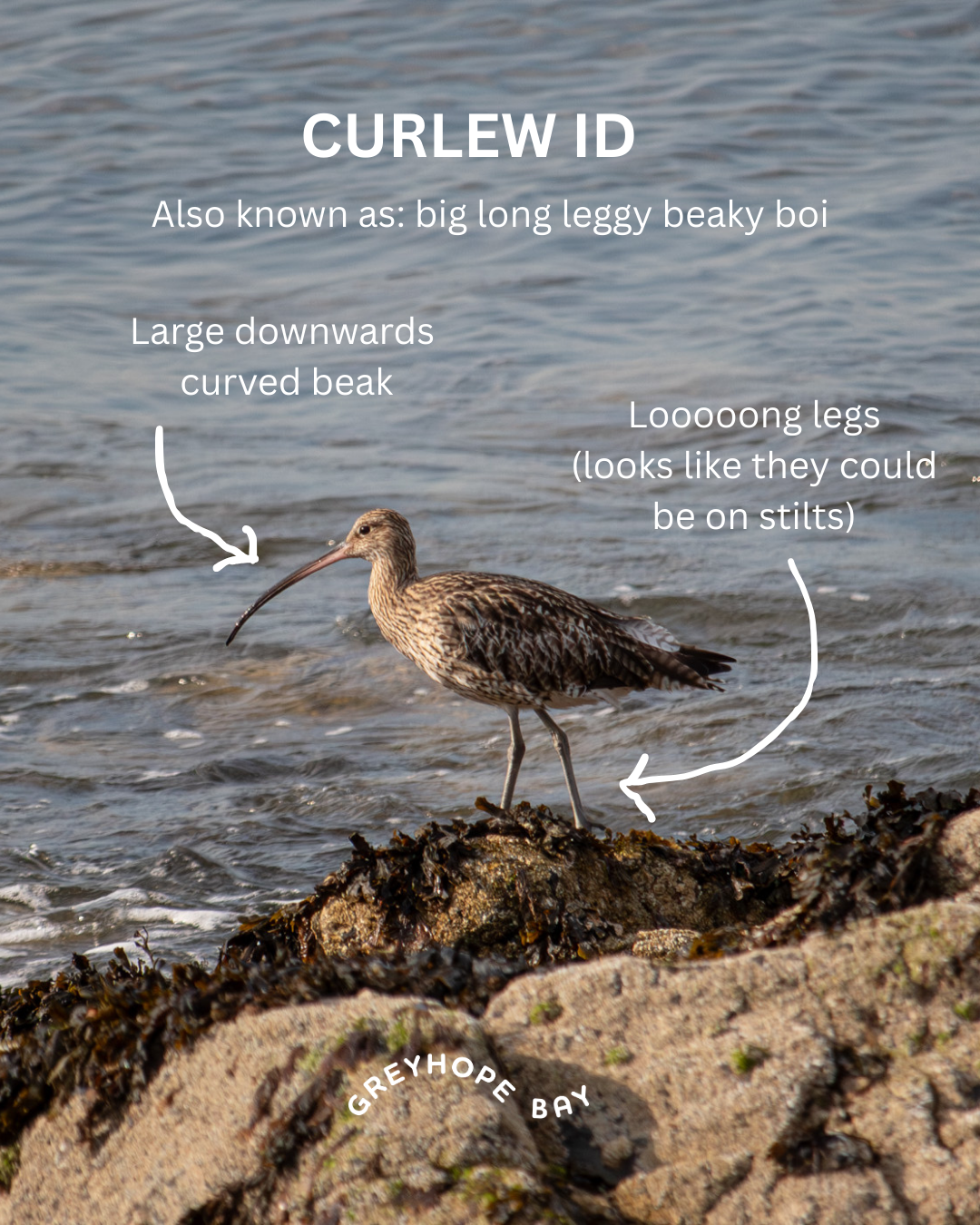
You hear one before you see one. A bird with a long cry that pierces the haar, with a longer bill to match. This is the curlew, whaup (in Scots), or Numenius arquata.
They are unmistakable once you do spot these well camouflaged birds foraging amongst the rocks, mud, and seaweed around Greyhope Bay and other local estuaries. The largest of our wading birds, their legs keeping them well above the water while their incredibly long (we cannot overstate how long it is) downcurved bill probes into the mud and crevices.
Despite the curlew’s position in our arts and imaginations, they are one of the most threatened of our local birds. They have been Red Listed as a bird of conservation concern in the UK, as well as classed as Near Threatened across their wider habitats globally - with their local summer population declining by 50% since 1995 due to changes in their breeding habitat and predation.
In summer they nest in meadows, open farmland, and hill moorland hence their long association with rural life; but in winter you can spot them foraging by the coast where they are joined by other curlews from Scandinavia.
This week's Wild Wednesday post was written by one of our brilliant volunteers, Syabil.
📷Photos: 1 Andy Hastie, 2 & 3 Syabil Azri Arian.
The rich text element allows you to create and format headings, paragraphs, blockquotes, images, and video all in one place instead of having to add and format them individually. Just double-click and easily create content.
A rich text element can be used with static or dynamic content. For static content, just drop it into any page and begin editing. For dynamic content, add a rich text field to any collection and then connect a rich text element to that field in the settings panel. Voila!
Headings, paragraphs, blockquotes, figures, images, and figure captions can all be styled after a class is added to the rich text element using the "When inside of" nested selector system.


